Catalyst Seminar Series: AI and Society
Exploring the Role of Large Language Models (LLMs) in Social Science Research
The Alliance Program—a transatlantic partnership linking Columbia University with École Polytechnique, Paris 1 Panthéon-Sorbonne, and Sciences Po—has, over the past year, convened a series of seminars under the theme “AI and Society.” These gatherings have fostered research exchange and strengthened dialogue among scholars from both sides of the Atlantic.
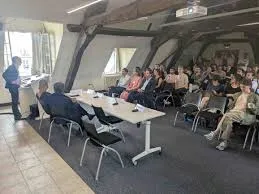
On June 27, Sciences Po, in collaboration with École Polytechnique, hosted the third seminar of the series: “Exploring the Role of Large Language Models (LLMs) in Social Science Research.” The event assembled researchers across disciplines—including sociology, political science, history, and economics—to discuss how emerging AI tools, particularly LLMs, are reshaping research methods in the social sciences and humanities.
An especially engaging element of the seminar was the involvement of students from the Summer Institute in Computational Social Science SICSS Paris. Participating as part of their summer program, they enriched the conversations with insightful questions and perspectives drawn from the next generation of scholars.
Through lively presentations and discussion, participants examined how artificial intelligence—especially LLMs—is transforming the ways social scientists analyze and interpret complex societal dynamics. The event represented a meaningful step in advancing collaboration between institutions at the intersection of AI and society.
Speakers included:
- Emma Bonutti D’Agostini (Sciences Po / Institut Polytechnique de Paris): Mediated Voices: A CSS Investigation into Journalists’ Portrayal of the Political Sphere
- Bart Bonikowski (NYU): National Identification on Twitter, or How to Find a Needle in a Haystack with LLMs
- Matthew Connelly (Columbia University): America’s Top Secrets: Using AI to Decipher Official Secrecy
- Thomas Renault (Paris 1 Panthéon-Sorbonne): Forecasting Inflation with Large Language Models: A Multilingual, News-Based Approach