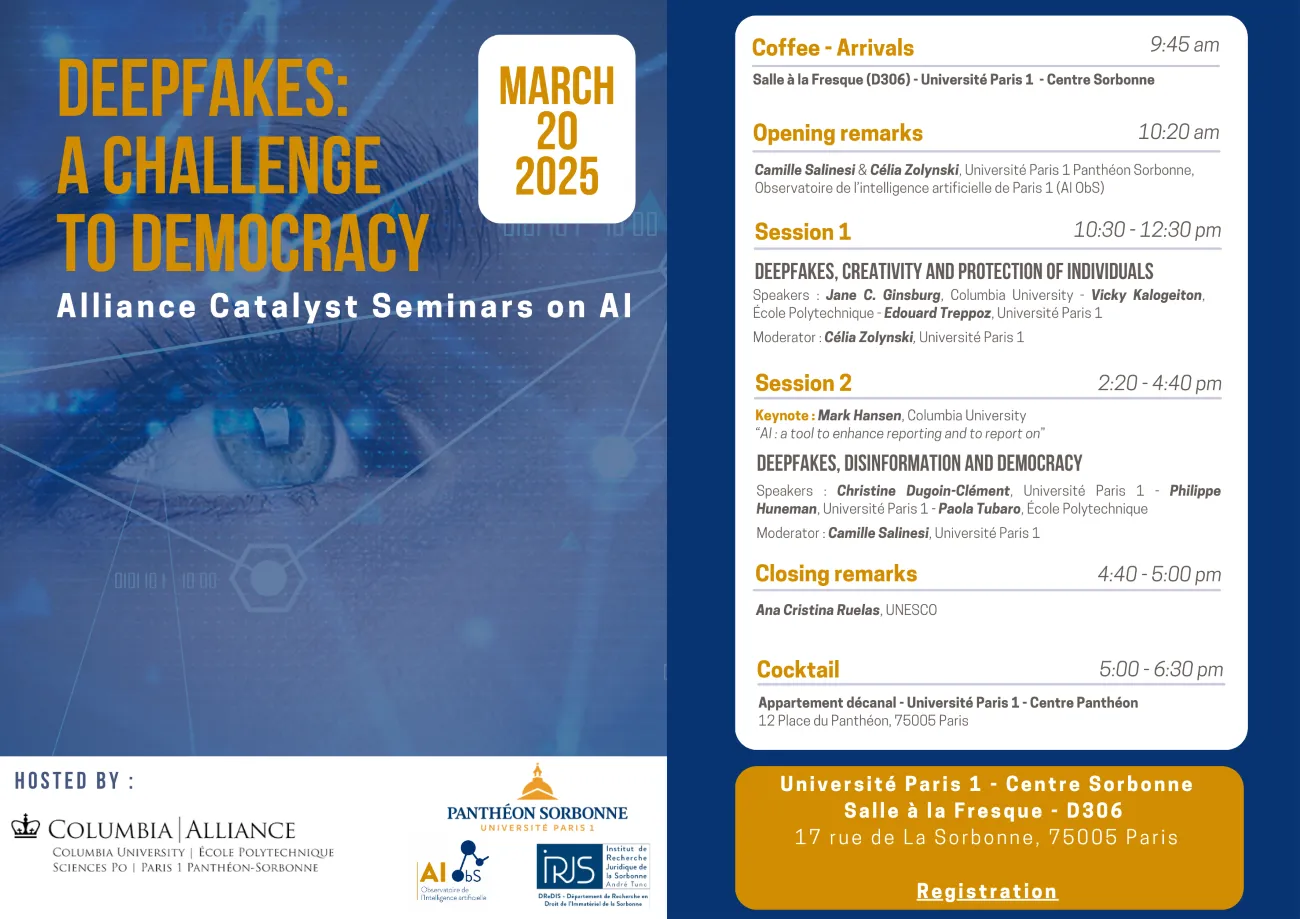
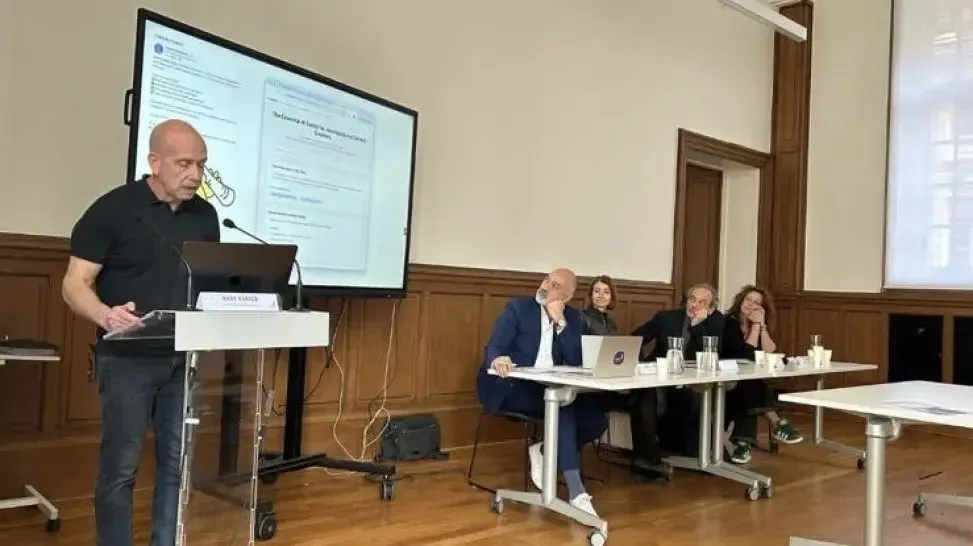
Part of the Catalyst Seminars on AI & Society series, this second event—hosted at Paris 1 Panthéon-Sorbonne—examines how deepfake technology is transforming our information ecosystem. Scholars and experts will explore its implications for democracy, privacy, and creativity, and discuss how law, ethics, and innovation can safeguard public trust.
Publications | UNESCO Report FR EN
Panel 1: Deepfakes, Disinformation, and Democracy
In May 2019, a deepfake video of US Speaker Nancy Pelosi looking drunk appeared on Facebook. The company refused to take it down. From 2020 to 2021, social media personas produced through “generative adversarial networks” (GANs) – a specific kind of AI – criticized Belgium’s position regarding 5G, in an apparent effort to support the establishment of Chinese-led 5G infrastructure. Over the last few years, deepfakes have increasingly been used by malign actors to spread false rumors, disinform, influence opinion, and polarize the general public around controversial political issues. Recognizing its potential to divide and to defame political opponents, the State of California recently banned deepfake technology during the electoral season.
What long-term threat does deepfake technology represent in the current political climate in Europe and the United States? How can states address the kind of disinformation generated by deepfakes? What legal tools can be mobilized to force social media platforms to monitor and/or remove deepfake content? Can media literacy education make citizens more resilient and protect them against the harm of deepfakes? Can the widespread use of deepfakes further erode trust in legitimate sources of information? Could malign actors sow doubt, spreading suspicion on legitimate content? How can truth, trust in legitimate sources of information, and the integrity of democratic practices be protected against the threat of deepfakes?
Panel 2: Deepfakes, Privacy, and the Protection of Citizens
In October 2020, researchers reported over 100,000 computer-generated fake nude images of women created without their consent or knowledge, according to Sensity AI, a firm that specializes in deepfake content and detection. Some of these nude images apparently depicted under-aged individuals as well. Such use of deepfakes can have serious long-term social and psychological consequences on victims, particularly if they are young. Deepfake technology is also behind an increasing number of fraud schemes. Audio deepfakes are commonly used to commit fraud over the phone. And in a notorious case, in 2024, a finance worker was tricked into paying out $25 million to fraudsters who used deepfake technology to pose as his colleagues in a video conference call.
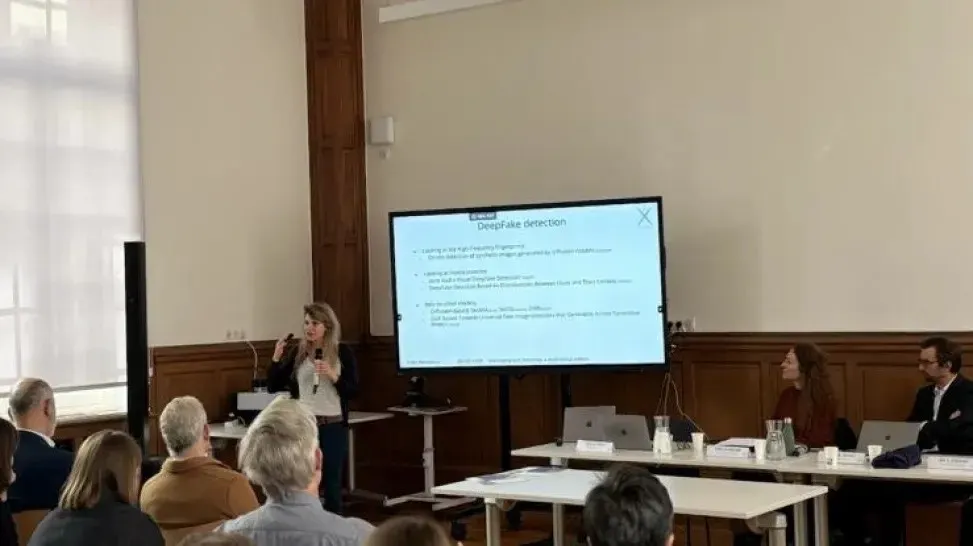
How can we collectively combat this use of technology, aimed at harassing, harming, or defrauding private individuals? What technological solutions can be deployed to ensure the public is properly protected from these kinds of threats? Can AI models, for example, be used to detect deepfakes? Could watermarks or blockchain offer innovative solutions? Can the power of law be invoked to address the proliferation of deepfakes? Do regulatory measures work?
Panel 3: Deepfakes and Creativity
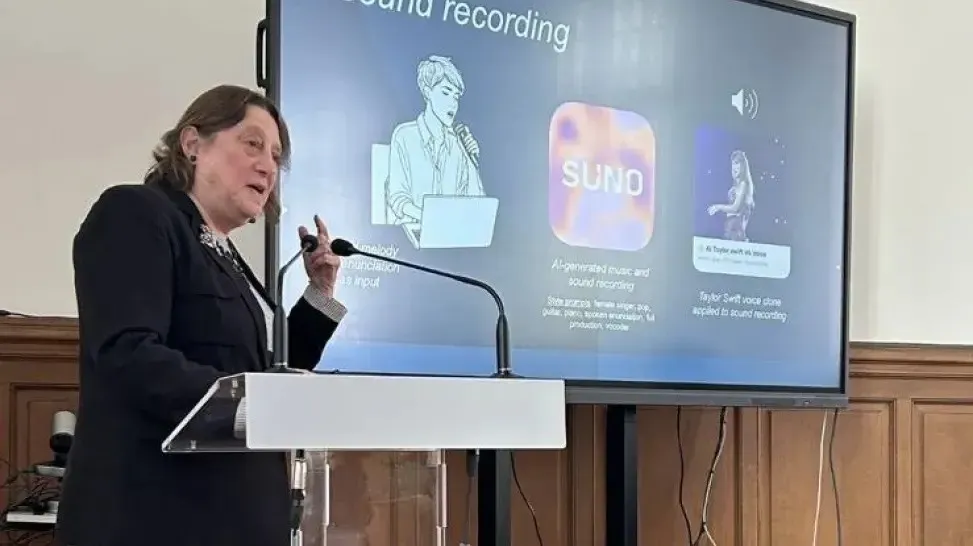
Deepfake technology has also penetrated the world of art. Since 2019, the Dalí Museum features a life-size deepfake of the artist interacting with visitors. Deepfakes have also been used by choreographers, filmmakers, and theater directors to create similes of backup dancers or extras, for instance. And in Moscow, researchers from the Skolkovo Institute of Sciences and Technology have “animated” portraits of the Mona Lisa to make her move and talk like a real person. Some of these uses of deepfakes can, arguably, have positive effects. They can provide personalized experiences to audiences and allow them to engage in novel ways with deceased artists.
But deepfake technology also carries challenges. What are the ethical implications of using and re-purposing an artist's voice or image through deepfake technology? Does the use of deepfake raise intellectual property considerations? From a creativity perspective, can deepfakes really improve our experience of art? Do they democratize access and engagement with artworks, or do they simply dumb them down, while excluding other, more meaningful ways of discovering artistic creations?